The Ultimate Guide to Affiliate Marketing Part III
Published on 16.02.2021 by Jaynike Team
Today we will focus on traffic sources. There are many types of ads, and you've seen them in different shapes, forms, languages, time-zones, creatives, images, videos, etc.
When an affiliate marketer is looking for successful campaigns, traffic source selection is the central part. Landing pages, funnels, offers, and even the main message on the page are essential indeed, but without a good traffic source you can lose a lot of money on testing. That's why it's essential to understand traffic basics and find the best source that fits your criteria perfectly.
What to look at when choosing a traffic source?
When it comes to selecting particular traffic sources, every affiliate marketer is very careful. If you pick a good traffic source from the start, you have a much better chance of seeing profit in your tracker.
The overall quality of traffic source - you need to look at the overall quality. Go to the forums and ask questions related to particular traffic sources. Understand what type of audience will visit your funnel/landing page form that source.
Rules and regulations - keep a very close eye on traffic networks' regulations and rules. Some of the traffic sources don't support particular headlines, incentives into the ads, creatives, keywords, or even offers. Please read the chosen network's regulations carefully and understand whether it fits your goal or not.
Cost of traffic - do your homework in this case. You need to understand the estimated budget for the next campaign, so ask others who use the chosen traffic source how much they spend on a daily basis. Ask affiliate marketers whether there is a cap on spending money, etc.
Search traffic
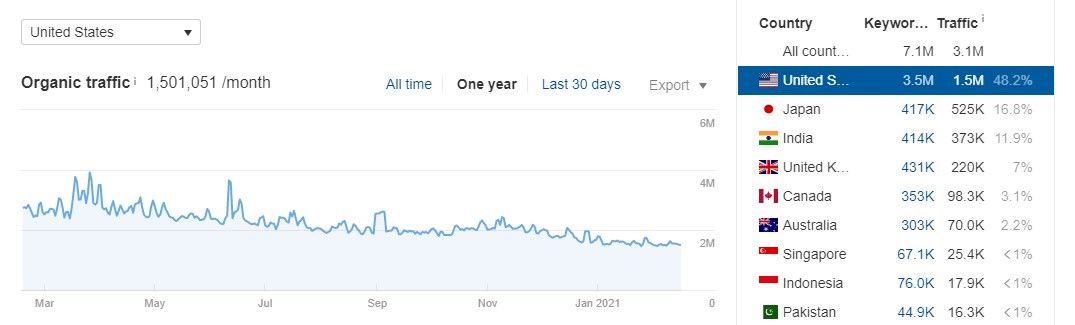
One of the best ways to get traffic is Google. To get it for free, your website has to rank for the right keywords, and that brings you visitors with a clear interest. Most people who search on Google know what they want, so they are often ready to buy. That's why many marketers see search traffic as the best quality traffic (the image below shows an estimate of TechCrunch's monthly search traffic).
Native advertising
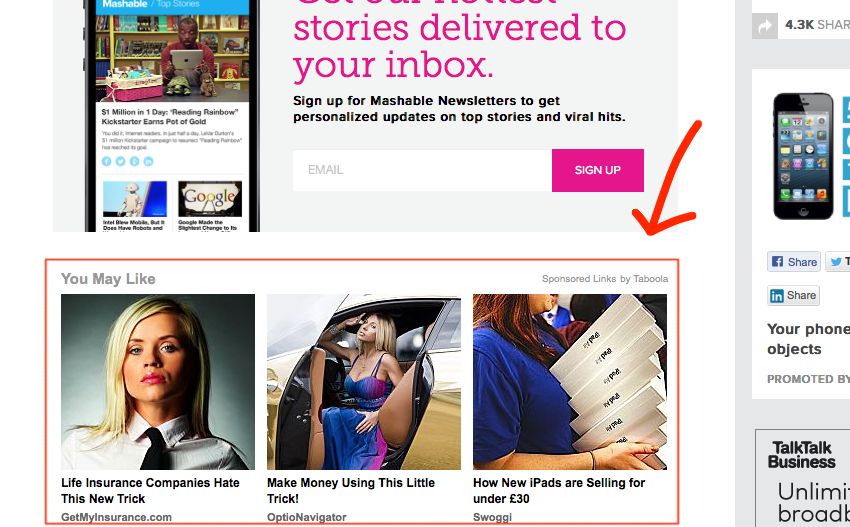
You have probably seen native ads many times. They match the look of the site they appear on, so they feel like part of the page. They still have to be clearly labeled as ads. The FTC says native ads must not trick people into thinking they are regular articles, which is why you see labels like "Sponsored" or "Promoted" next to them (the image below shows Taboola, a platform that places native ads on big news websites).
Push traffic
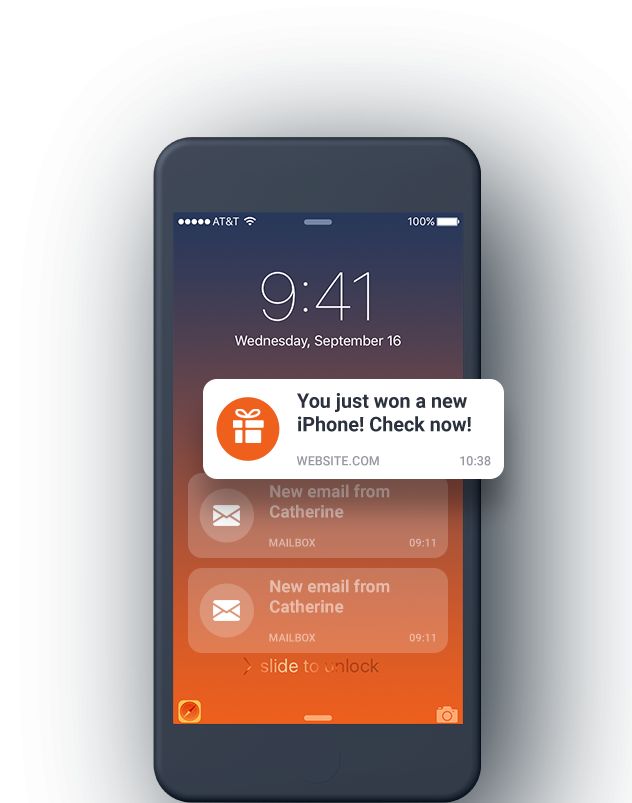
Push traffic is a fairly new source. You have surely seen websites asking if they can send you notifications in your browser or on your phone. Push ad networks show ads to people who said yes, as notifications. An affiliate marketer pays the network to send offers to these users, often a few times a day. Traffic quality is usually low, because people who signed up for updates from a random website are rarely interested in your niche. So expect a lot of testing before you find a winning campaign. Also make sure the network only sends to users who opted in, since spammy push ads break the rules of many advertisers (the image below from Mobidea shows how push notifications work).