The Ultimate Guide to Affiliate Marketing Part II
Published on 13.02.2021 by Jaynike Team
Welcome again to the next post regarding affiliate marketing. In the first post, we talked about affiliate marketing's pros and cons. Today, we will cover every critical element you should know before stepping into the affiliate game in 2021.
Affiliate marketing comes down to a few key elements. In this post, we look at the first two: offers and traffic sources.
Offers - The product/service you need to promote
There are many niches. You can find offers on Amazon, ClickBank, Walmart or on private affiliate networks. Private networks often have offers you won't find on the big open networks, and some pay higher commissions. The offer is the first key element of affiliate marketing.
Most networks sort their offers by vertical, such as dating, finance, gaming or health products. Be careful with some verticals. Health supplement offers (often called nutra) tend to use landing pages full of miracle claims. If you send traffic to false health claims, you can get your ad accounts banned and get into trouble with regulators like the FTC. Many experienced affiliates also tell beginners to start in cheaper markets outside the US and Western Europe, where clicks cost less. Whatever you choose, pick offers you would be comfortable recommending to a friend, and read the landing page before you send traffic to it.
Traffic sources - choose wisely.
There are different types of traffic sources. A beginner should choose one carefully and stick with it for a while. Here are the main ones (the image below shows an overview of traffic sources made by Voluum).
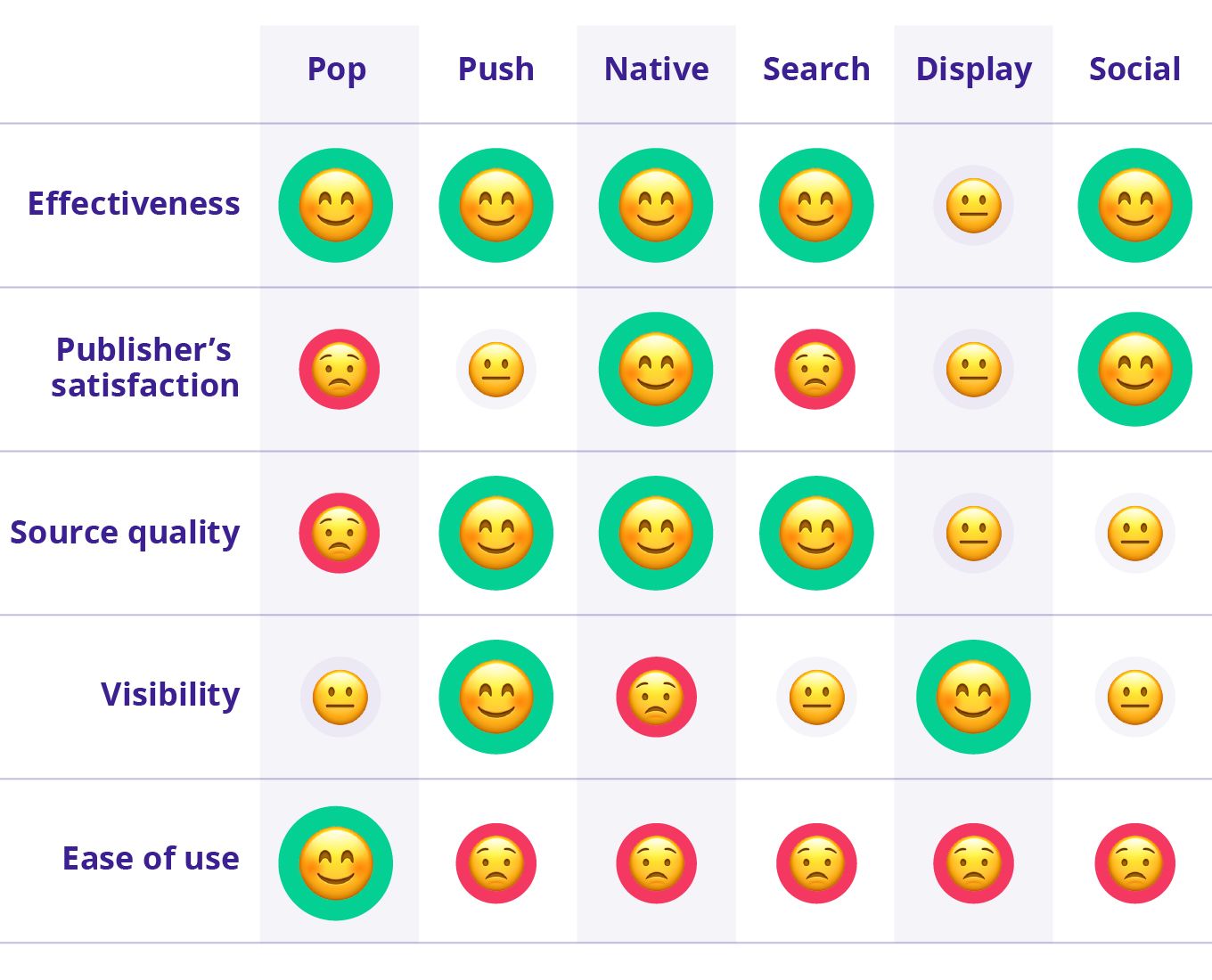
- Pop traffic: these ads open in a new window on low-quality websites, so expect low-quality visitors. The bounce rate is very high, but the traffic is cheap, so some offers can still make a profit.
- Push traffic: the same goes for push traffic. These ads show up as notifications from websites that people allowed to send them alerts in Chrome or other browsers. The traffic is cheap and the quality is usually low.
- Native traffic: native ads appear on big news and media sites through networks like Taboola and Outbrain. They look like the content around them but must be labeled as ads. The quality can be high, so prices and competition are high as well.
- Search traffic: visitors come from Google and other search engines, through ads or through pages that rank. These people are often looking for something specific, so search traffic is strong, and the price is also high.
- Social traffic: visitors come from social networks like Facebook, Instagram, TikTok or YouTube, through paid ads or your own content. Every platform has strict ad rules, so read them before you start.